
Live client sites, named and linked
WordPress work you can open and check
WordPress and WooCommerce sites we build and look after, for businesses in the United States, Australia and Europe. Every one is named, every one is linked, and every one is running right now.
Most agency portfolios are a wall of logos you cannot verify. This page takes the opposite approach: click any name and you land on the actual site. If it is slow, or broken, or nothing like what we claimed, you will know in one click — which is the only reason a portfolio is worth reading.
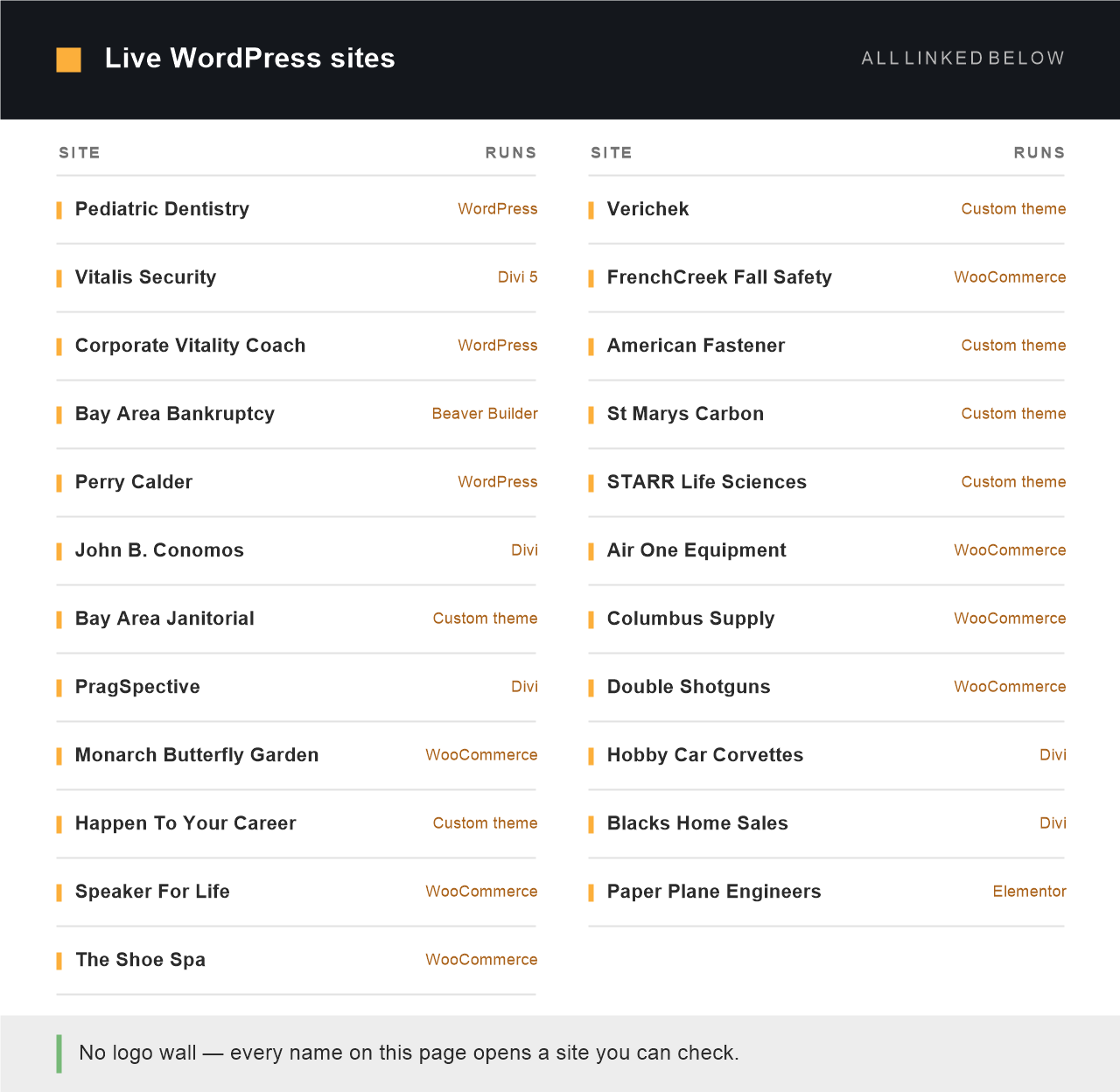
How to read this page
No before-and-after numbers, on purpose
You will not find “conversions up 340%” anywhere below. Those figures are easy to write and almost impossible for a reader to check, and most of the ones you see on agency sites were never measured at all.
What you get instead is the part that can be verified. Each entry says what the business does, what the site has to do for it, and what the site actually runs — the theme, whether it is WooCommerce, what handles the forms. All of that is visible in the page source of the live site, so you can confirm every word without taking ours for it.
Where there is a measured number on this page, it says how it was measured and on what date. That is a slower way to write a portfolio, and a duller one. It is also the only version that survives being checked.
Sites that have to bring in enquiries
Service businesses
These sell an appointment, a consultation or a quote. Nothing is bought on the site, so the entire job of the build is to get a stranger from a search result to a filled-in form without losing them on the way.
Pediatric Dentistry of San Antonio
A children’s dental practice in San Antonio, Texas. A dental site has an unusual audience problem: the person reading it is an anxious parent, not the patient, and the thing they are deciding is whether their child will be frightened. The site leads on that rather than on clinical credentials, and every route through it ends at booking an appointment.
It runs on a WordPress child theme rather than a page builder, which is why a site this image-heavy still answers in well under half a second.
- WordPress
- Child theme
- Appointment booking
- 147 ms server response

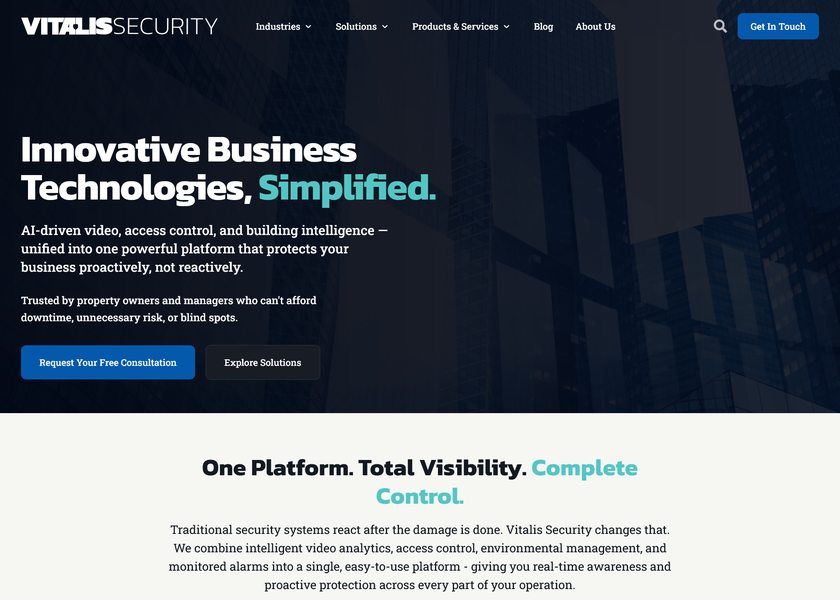
Vitalis Security
Commercial security for businesses and commercial property — video analytics, access control, monitored alarms and environmental management, sold as one platform rather than four separate installations. The buyer is a property owner or a facilities manager comparing vendors, and that decision is slow, technical and made by committee. So the site does not try to close it. Every route through it ends at a free consultation, because the honest next step in that sale is a conversation and not a price.
Divi 5 on a child theme, with Gravity Forms behind the consultation requests.
- WordPress
- Divi 5
- Gravity Forms
- Consultation enquiries
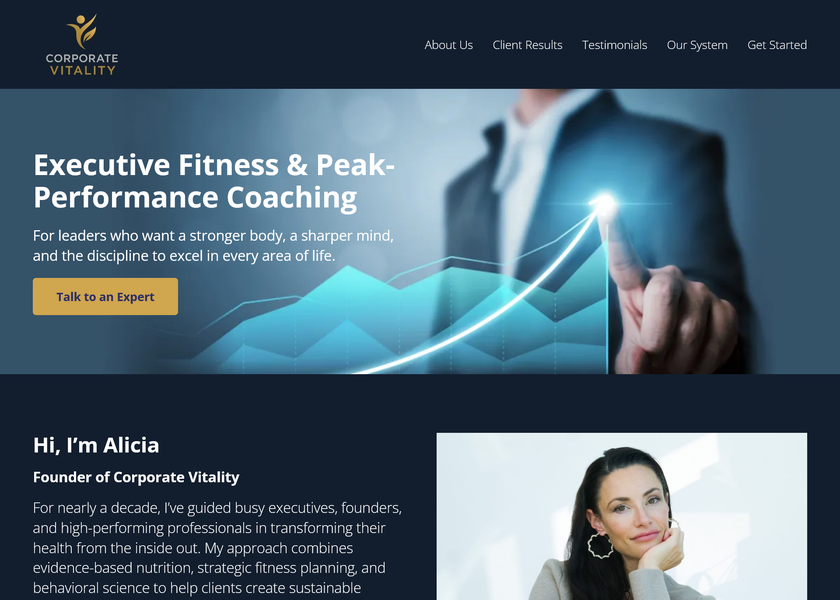
Corporate Vitality Coach
Executive fitness and peak-performance coaching, sold on the coach’s own credibility. A personal-brand site lives or dies on whether the person feels real, so the build is arranged around her rather than around a service list — who she is, how the programme works, and what happened to the people who did it.
Elementor over a current WordPress release, kept deliberately light. It answers in about a tenth of a second, which is not what page-builder sites are usually known for.
- WordPress
- Elementor
- 82 ms server response
Bay Area Bankruptcy Lawyers
Chapter 7 and Chapter 13 bankruptcy, for people in Hayward, Oakland and the wider Bay Area. The audience problem is the whole brief. Somebody searching for a bankruptcy lawyer is embarrassed, expects to be judged, and expects to be sold to, so every part of the site exists to remove a reason to close the tab — the consultation is free and the page says so, the fee is flat and the page says so, and the attorney’s own name and record are on it rather than a stock photograph of a courthouse.
Beaver Builder over a child theme, with the header, footer and page shells built as Themer templates so the practice-area pages cannot drift apart from each other.
- WordPress
- Beaver Builder
- Consultation enquiries
- 337 ms server response

Perry Calder
Medical malpractice and personal injury, from Pittsburgh and across Western Pennsylvania. A firm like this is judged on outcomes, so the site is built around 279 published case results and seven attorney profiles rather than around a menu of services. Somebody deciding whether to pick up the phone needs to find a case that resembles their own, which is a browsing problem before it is a design one.
A child theme on Twenty Nineteen — an old core theme, kept because it is quick and nothing about it is broken. Gravity Forms behind the enquiries, with a Turnstile check on them.
- WordPress
- 279 case results
- Gravity Forms
- 84 ms server response

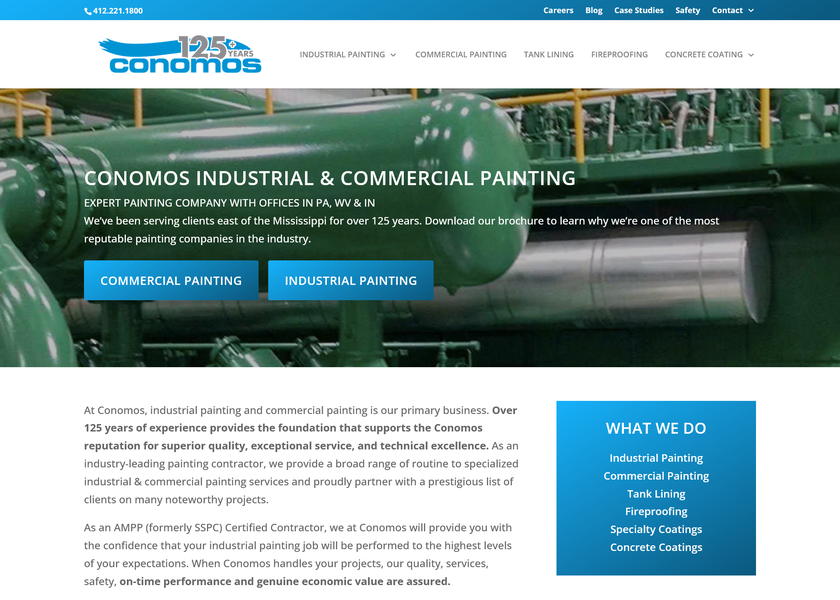
John B. Conomos
Industrial and commercial painting across Pennsylvania, West Virginia and Indiana. This is work that gets specified rather than shopped for: the reader is a project manager checking whether a contractor has handled this exact kind of job before, so the site is arranged around project types and capability rather than around a photo gallery.
Divi over a long-lived child theme, with WP Rocket handling the caching — a site that has been maintained rather than rebuilt.
- WordPress
- Divi
- Project-type pages
- 99 ms server response
Bay Area Janitorial Force
Commercial janitorial contracts across San Francisco, Oakland, San Jose and Santa Clara. Cleaning is bought on trust and on proximity, so the site’s job is to show a prospect that the company already covers their particular patch and can be reached today. Thirty-five pages carry the service-and-area combinations people actually type into a search box.
A custom theme kept deliberately light, with search added into the menu so the area pages stay reachable.
- WordPress
- Custom theme
- Service and area pages
- 87 ms server response

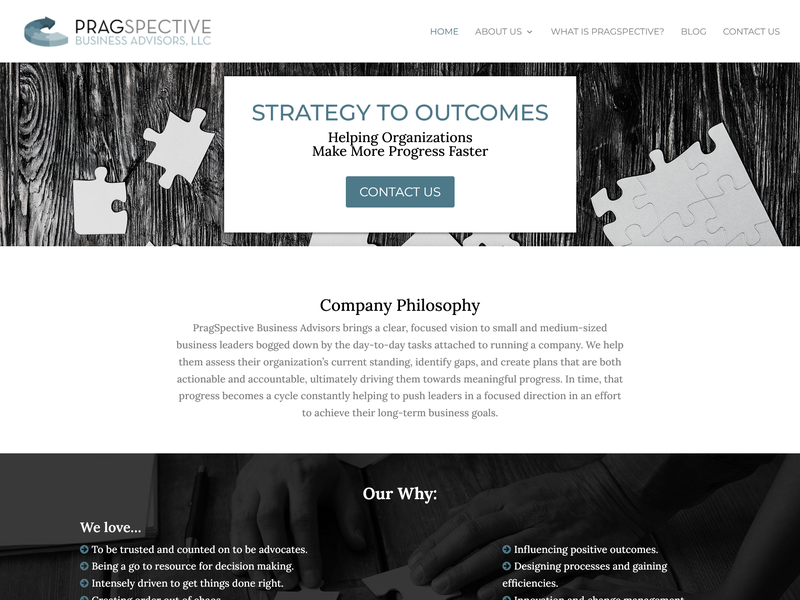
PragSpective Business Advisors
Advisory work for leaders trying to turn a strategy into something that actually ships. Consulting has nothing to photograph and no product page to write, so the credibility has to come from the thinking itself. That is why the site is built around a thirty-five-post archive rather than a brochure: the writing is the proof.
Divi on a child theme, with thirteen pages carrying the offer and the archive doing the rest.
- WordPress
- Divi
- 35-post archive
- 28 ms server response
Sites that publish at volume
Publishing and selling on one site
These earn their traffic from search and then sell something to it. They are the sites where WordPress performance actually gets difficult, because a large archive, a shop and a logged-in area all pull in different directions.
Monarch Butterfly Garden
A long-running pollinator gardening publisher with a WooCommerce shop attached — years of guides on raising monarchs, plus seeds, plants and gifts sold against them. The interesting constraint is seasonal: monarch migration traffic arrives in a spike, and the site has to absorb it without the shop slowing the articles down.
A heavy content archive that still answers in around a tenth of a second.
- WooCommerce
- Kadence
- Large content archive
- 84 ms server response

Happen To Your Career
Career-change coaching, built around a long-running podcast and a set of paid programmes. The site has to work as a podcast archive, a free-resource library and a shop at the same time, and it has to move someone from an episode they found by accident to a paid programme without ever feeling like a funnel.
A custom theme with WooCommerce behind it, and a server that starts answering in well under a tenth of a second.
- WooCommerce
- Custom theme
- Podcast archive
- 69 ms server response

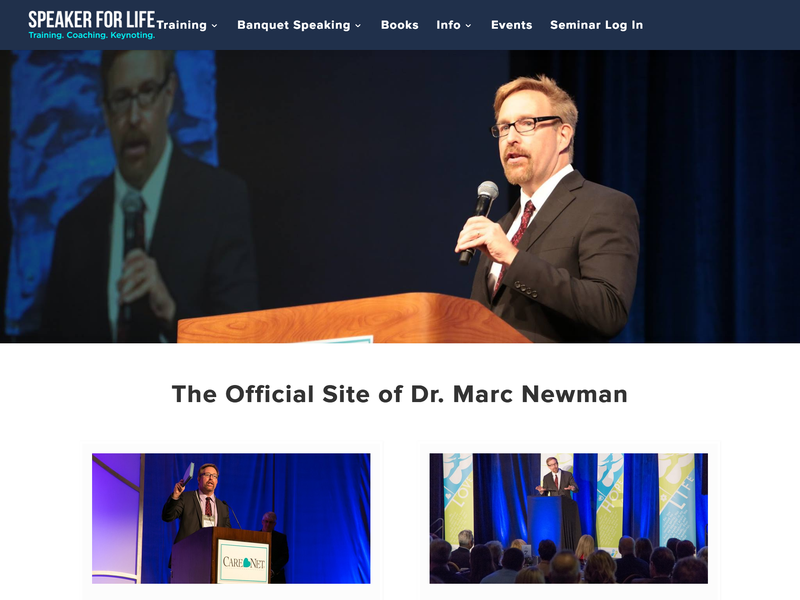
Speaker For Life
The official site of Dr. Marc Newman, covering both speaker training and banquet speaking engagements. Two quite different transactions share one site: booking a speaker for an event, which is a conversation and a date, and buying training, which is a product. Both had to be obvious from the home page without either being buried.
Divi with WooCommerce and a booking flow — an inherited stack rather than one we would pick, kept working and kept updated.
- WooCommerce
- Divi
- Booking flow
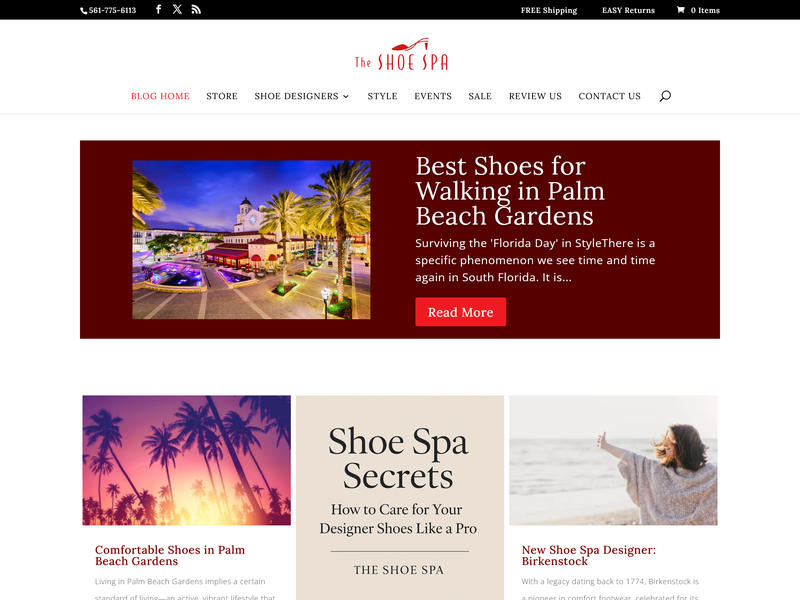
The Shoe Spa
Designer comfort footwear for women, sold online and fitted in person at the shop in Palm Beach Gardens, Florida. There are 332 products on the site and a 328-post archive sitting beside them, and the archive is what makes the shop findable. Nobody searches for comfort shoes. They search for a designer they already trust and a foot problem they already have, which means the writing has to answer the search and the product has to be one step from the answer.
Divi on a custom child theme with WooCommerce behind it, and a hundred product categories carrying the designer lines the shop stocks. There is a second conversion on this site that a checkout cannot handle at all: booking an in-store fitting.
- WooCommerce
- Divi child theme
- 328-post archive
- 99 ms server response
Big catalogues, no checkout button
Catalogues that do not check out
These carry hundreds of products between them and not one of them takes a payment. Industrial buying runs on quotes, specifications and distributors, so the catalogue has to end in an enquiry rather than a card. That is a harder build than a shop, not an easier one: everything a store gets for free from WooCommerce — filtering, variants, stock, the cart — has to be kept, while the one part it is designed around is removed.
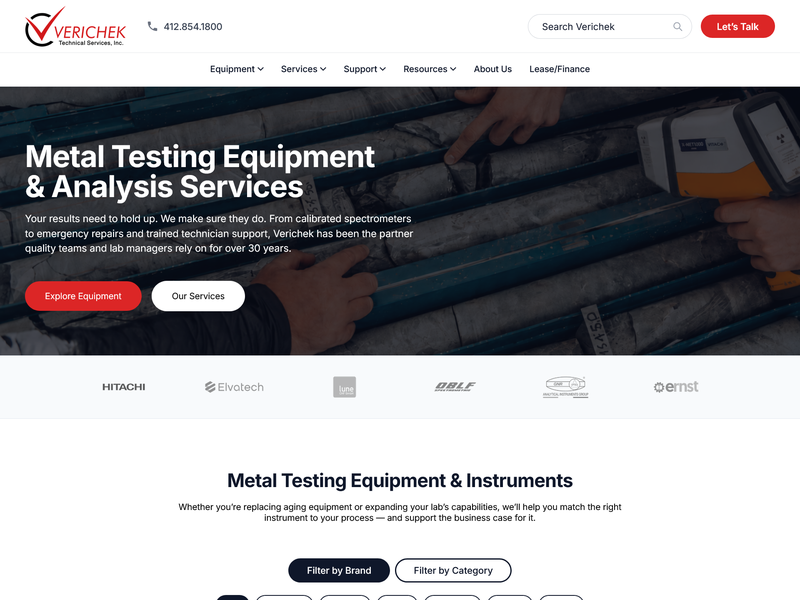
Verichek
Metal testing equipment and analysis for quality teams and lab managers — XRF analyzers, optical emission spectrometers and hardness testers, plus calibration, repair and PMI testing. Nobody buys a spectrometer from a product page. It is a capital instrument matched to a specific process, so the site’s job is to narrow a fifty-instrument catalogue down to the two worth a phone call, which is why it leads with filtering by brand and category rather than with a shop.
A custom theme on Twenty Twenty-Five, with the catalogue held as custom post types and the filter written as a native block in the theme rather than bolted on with a page builder. Gravity Forms handles enquiries, behind a Cloudflare Turnstile check.
- WordPress
- Custom theme and blocks
- Filterable catalogue
- 87 ms server response
FrenchCreek Fall Safety
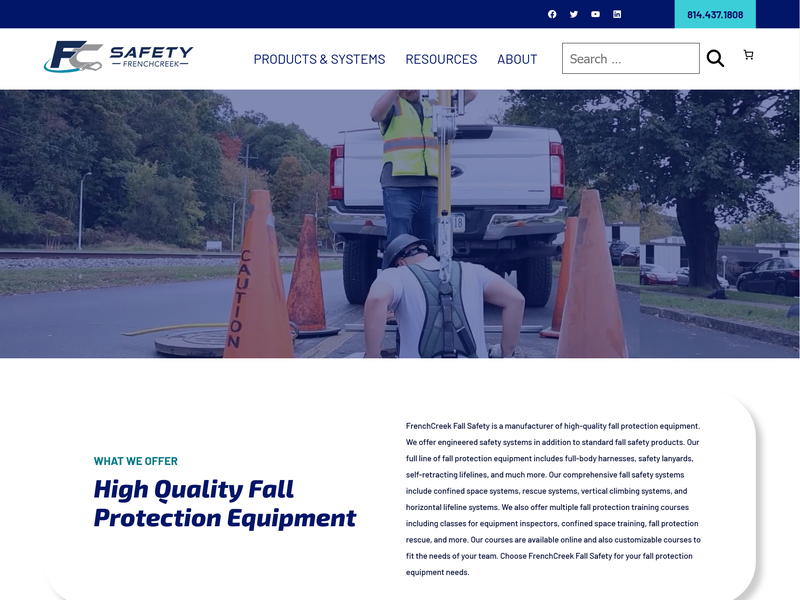
Fall protection equipment — harnesses, lanyards, anchors and rescue gear — sold to industry through a distributor network. There are 466 products on the site and not one of them shows a price. Safety equipment is specified against a standard and quoted through a distributor, so every product ends at “Add to Quote” instead of a checkout. The real problem is filtering: a specifier who needs a shock-absorbing lanyard rated to a particular standard has to reach it in a few clicks out of hundreds.
WooCommerce running the catalogue with the checkout replaced by a quote flow, faceted search over the top, and 352 resource documents — spec sheets, manuals, certificates — indexed alongside the products.
- WooCommerce
- 466 products
- Add to Quote, no checkout
- 352 resource documents
American Fastener
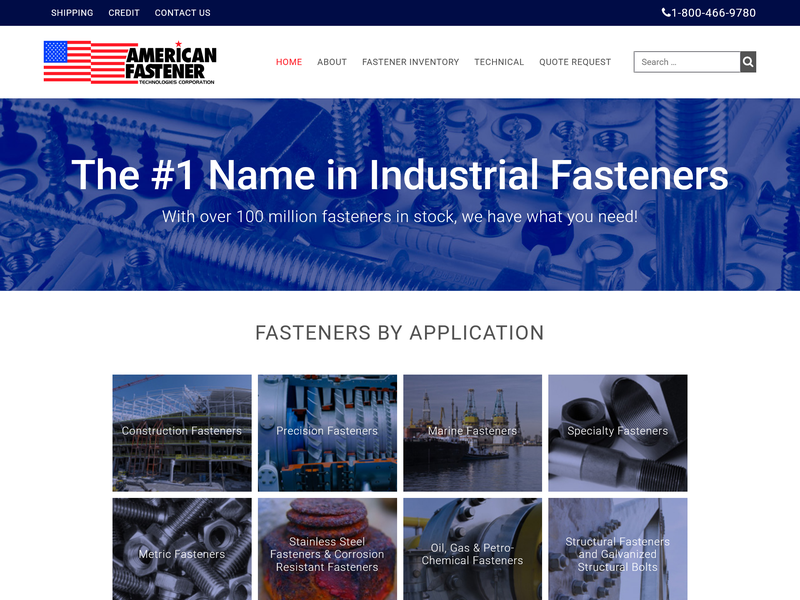
Industrial fasteners, in business since 1983, with over a hundred million pieces in stock. Nothing is priced and nothing is bought on the site, because fastener buying runs on a quote against a specification. Sixty pages divide the range by application — construction, marine, structural, metric, stainless, oil and gas — because that is how a buyer searches. Nobody types a part number into Google when they do not know it yet.
A custom theme with no page builder and no custom post types at all — sixty hand-built pages, which is the right answer when the range is stable and the thing worth ranking for is the application rather than the part.
- WordPress
- Custom theme
- 60 application pages
- 87 ms server response
St Marys Carbon
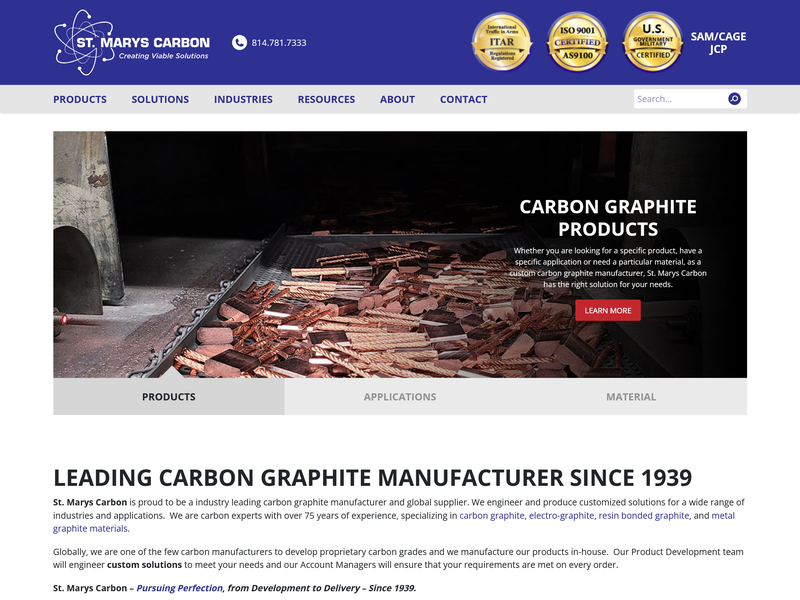
A carbon and graphite manufacturer making mechanical components to order. The catalogue problem here is unusual, because the product is a material as much as it is a part: the same component in a different grade is a different product. So the site is indexed three ways at once — by material, by application and by product type — and an engineer who arrives knowing only one of the three has to be able to reach the other two.
A custom theme with material, application and product type each built as its own taxonomy rather than as one flat category list, plus a thirteen-project portfolio and specification tables throughout.
- WordPress
- Three-way indexing
- Specification tables
- 88 ms server response
STARR Life Sciences
Physiological monitoring equipment for small-animal research — pulse oximetry, telemetry and activity monitoring, sold to laboratories worldwide. The commercial argument here is made by other people’s work: the site carries 317 published papers whose research used the instruments, indexed by study type. To a researcher deciding what to put in a grant application, that is worth more than any product description. A distributor network of thirty-nine is mapped by continent.
A custom theme where publications, products, distributors and study categories are each modelled as their own content type — the heaviest content architecture on this page, and still a server response in the tens of milliseconds.
- WordPress
- 317 publications
- 39 distributors
- 25 ms server response

Big catalogues that do take the payment
Stores that sell to departments
A fire department does not buy the way a shopper does. It buys tax exempt, often against a purchase order, at a price agreed for its own account, and the heavy items ship on freight rather than a flat rate. These two run a full WooCommerce checkout and then have to bend almost every part of it — pricing, tax, shipping and the route out to a quote — around a buyer who is spending public money. Both also run the same custom theme and the same family of custom plugins, which you can see in the page source of either, and that is how two catalogues this far apart in size stay maintainable side by side.
Air One Equipment
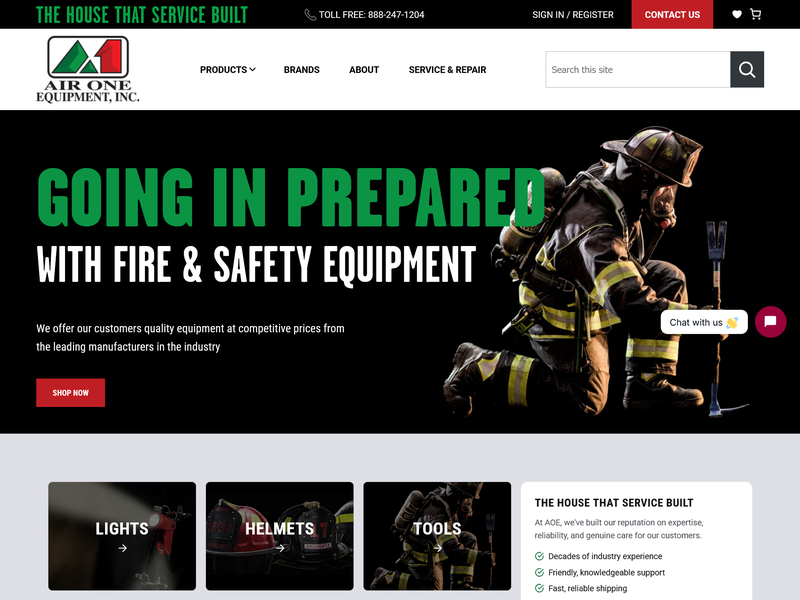
Fire and safety equipment sold to fire departments — turnout gear, breathing apparatus, extrication tools, hoses and personal protective equipment, 860 products across 91 categories and 93 brands. The part worth opening is the turnout gear builder. A firefighter’s kit is not one product, it is a specified set, so the site walks a buyer through helmet, hood, coat, gloves, boots and tools as a single configured order instead of leaving them to find eight products separately and hope the set matches.
A custom theme with WooCommerce, card payment through Authorize.Net, carrier-rated shipping for items too heavy for a flat rate, tax exemption for departments, and a quote request sitting beside the checkout for anything that has to go through procurement.
- WooCommerce
- Custom theme
- 860 products
- Turnout gear configurator
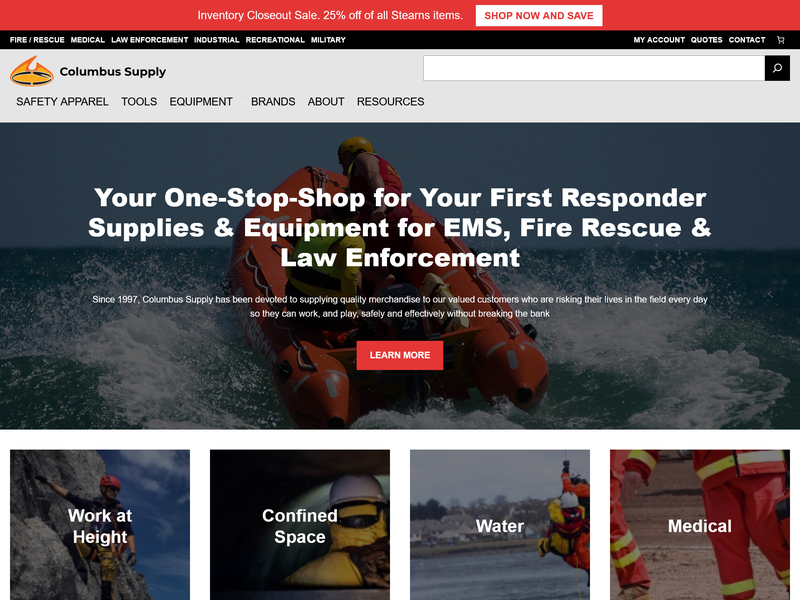
Columbus Supply
Wholesale fire, rescue, emergency medical and law enforcement supply — 11,156 products in 640 categories from 226 brands. Eleven thousand products is a different problem from a few hundred rather than a bigger one. Nobody browses a catalogue that size, so the whole build rests on search, on a category tree that stays navigable when it goes several levels deep, and on product records complete enough — UPC, part number, brand, variant images — that a buyer can match what is in their hand against what is on the screen.
WooCommerce with Square taking the payment, account-based pricing so a department does not see the walk-up price, a tax exemption route for public buyers, and a quote request for the orders that will never go through a card.
- WooCommerce
- 11,156 products
- 640 categories
- Account-based pricing
Every item is the only one
Inventory that is one of a kind
A shop normally sells the same thing many times over. These three never sell the same thing twice — a used gun, a classic car and a manufactured home are each a single record that either sells or does not, carrying its own condition, history and price. Stock control, filtering and the whole idea of a product variant have to be rebuilt around that, and none of it comes free with the platform.
Double Shotguns
A firearms dealer trading since 1974 — new and used shotguns, rifles and handguns, alongside buying, selling, consignment and trade. A firearm cannot be shipped like an ordinary parcel, so WooCommerce runs the catalogue, the brands and the stock while the cart is rebuilt as an enquiry basket: a customer collects the guns they are interested in, sends the list, and the gun room picks it up from there. The site says so in plain words on every product rather than letting anyone reach a dead checkout.
WooCommerce on a Twenty Twenty-Five child theme. Most of the stock is second-hand and one of a kind, each item carrying its own serial number and condition grading — a harder thing to model than a shelf of identical SKUs.
- WooCommerce
- Block theme
- Enquiry basket, no checkout
- Serial-numbered stock

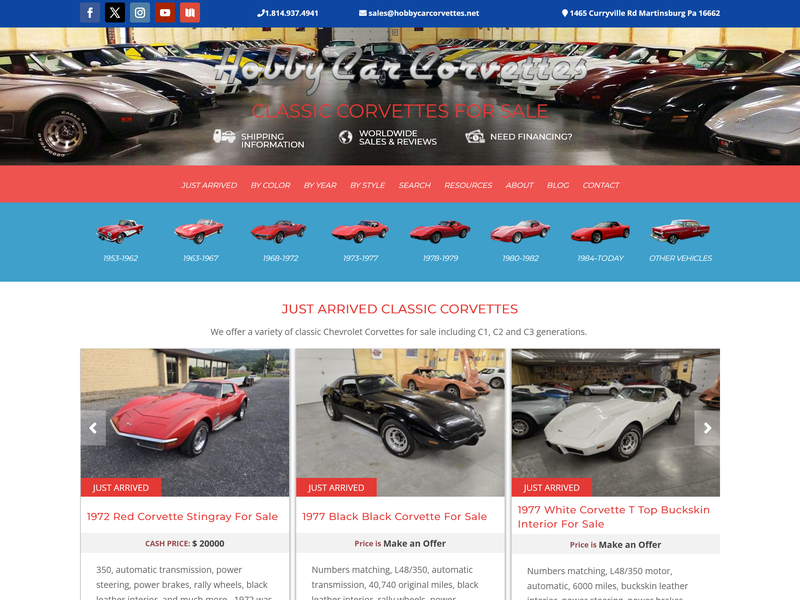
Hobby Car Corvettes
A classic Corvette dealership in Martinsburg, Pennsylvania, shipping worldwide. There are 550 cars on the site and every one of them is unique — its own year, colour, engine, transmission and condition — so this is not a product catalogue with stock levels, it is 550 individual records. Browsing runs on colour, year and body style, because that is genuinely how somebody hunting a 1972 Stingray thinks about it.
Divi on a child theme, with the cars held as their own content type across twenty-four categories. Enquiries run through Gravity Forms behind a Turnstile check.
- WordPress
- 550 individual cars
- Faceted browsing
- 103 ms server response
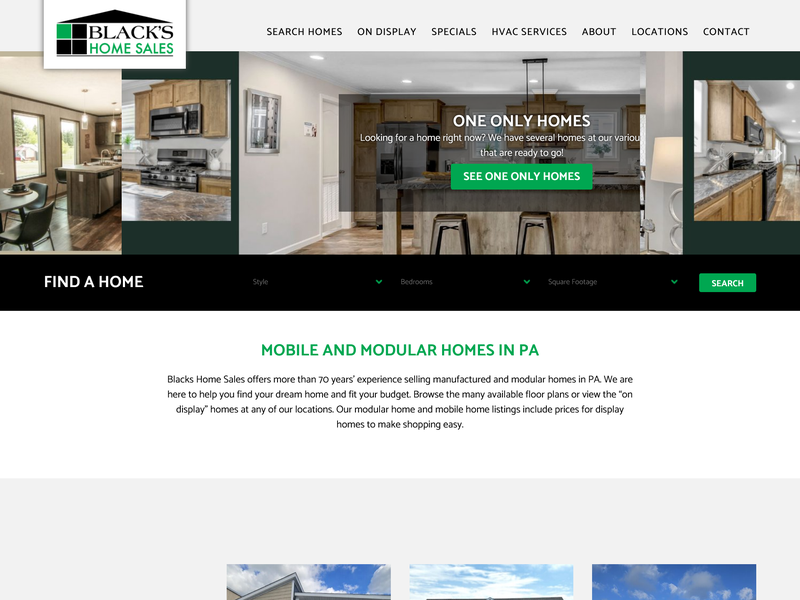
Blacks Home Sales
A Pennsylvania dealer in modular, manufactured and mobile homes. There are 301 homes on the site, set against eleven manufacturers, forty-one series and eight styles, and that is a genuinely awkward data problem: the buyer thinks in bedrooms and budget, the manufacturer thinks in series and floor plan, and the site has to make those two vocabularies meet. It also books site visits directly, because nobody buys a house without walking through one first.
Divi over a custom theme, with the homes modelled as their own content type and appointment booking built into the site rather than handed off to a third-party scheduler.
- WordPress
- 301 homes listed
- Appointment booking
- 103 ms server response
Work under somebody else’s name
White label
This section has one entry in it, and that is the point. Roughly a third of what we do sits behind another agency’s name, which by definition cannot be listed on our own portfolio. The one example here is an agency that agreed to be named.
Paper Plane Engineers
A digital marketing agency. Agencies are a particular kind of client, because their own site is the one that proves they can be trusted with somebody else’s — and it is always the site that gets pushed to the back of the queue while paying work comes first.
Astra with Elementor. This is also the pattern most of our white-label work takes: the agency keeps the client relationship, we do the WordPress build.
- WordPress
- Astra
- Elementor

One number, honestly reported
We sell speed, so here is speed measured
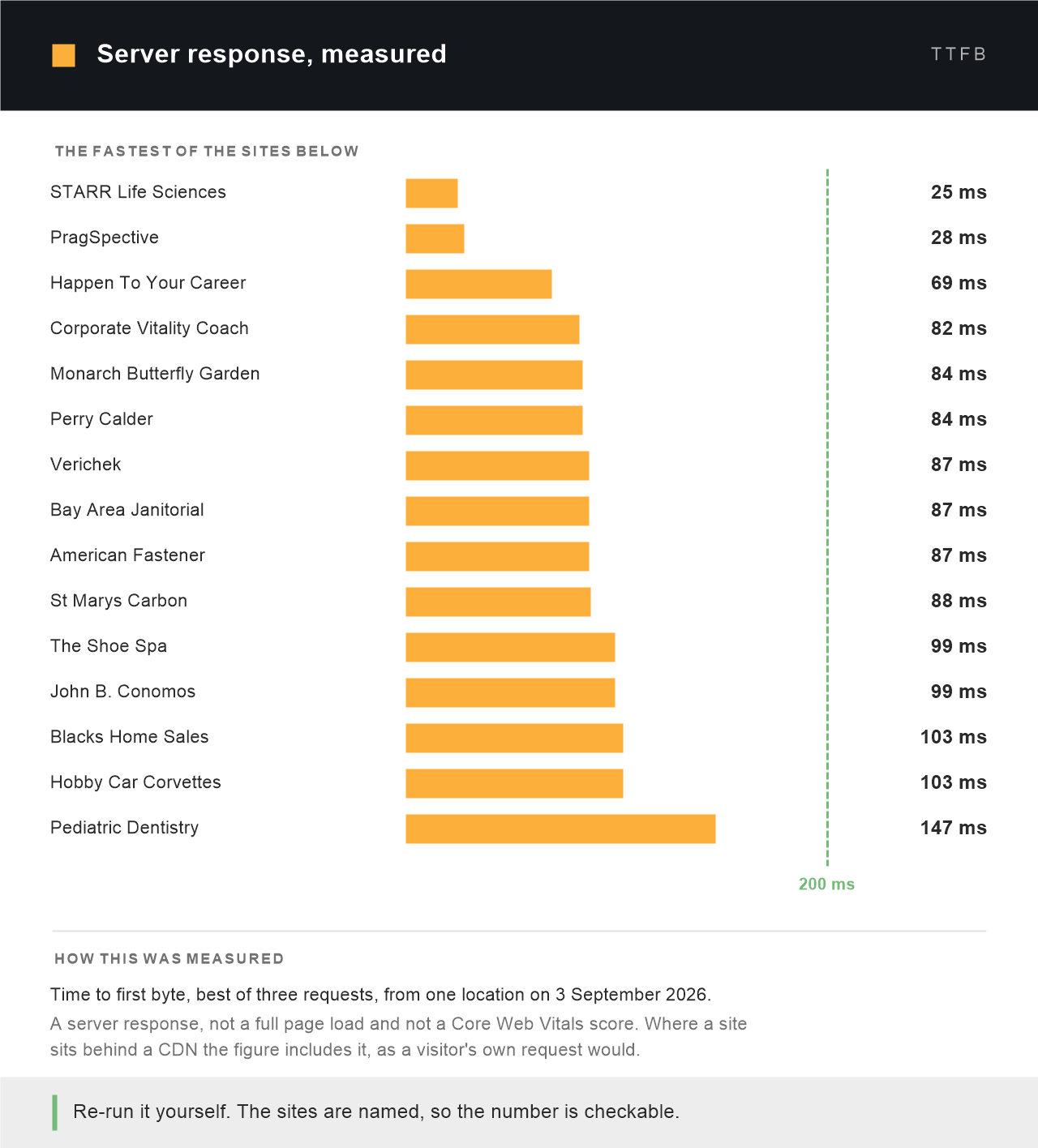
A company charging for WordPress speed optimization should be willing to put a stopwatch on its own client sites. Most of the sites on this page start answering in under an eighth of a second — comfortably inside half the 200 millisecond mark that counts as a good server response.
Two things about that chart are deliberate. It shows the fastest of these sites rather than all of them, and it says so on the chart itself — a few are slower than we would like, and publishing a client’s worst number on our own marketing page is not ours to do. And it measures time to first byte, meaning how quickly the server starts answering, which is not the same as a full page load and not a Core Web Vitals score. Quoting it as either would be exactly the sort of thing this page exists to avoid. Where a site sits behind a content delivery network the figure includes it, because that is what a visitor’s request actually meets.
The sites are named, so the measurement is repeatable. Run it yourself and you should get numbers in the same range, allowing for where in the world you are testing from.
What these jobs actually were
The same eight services, applied
Nothing on this page is a service we do not sell. Every project above is some combination of the eight things listed on the services page, which is the point — the portfolio and the price list describe the same work.
- WordPress Development — the custom themes and custom post types behind Verichek, STARR Life Sciences, St Marys Carbon and Happen To Your Career, where a commercial theme would have made the templates unmaintainable.
- WooCommerce Development — the stores above, including two whose carts had to be rebuilt as enquiry baskets: one because the product cannot legally be sold at a checkout, one because the industry buys on quotes.
- Speed Optimization — the reason a 550-car dealership, a 317-paper research archive and a sixty-page fastener catalogue all answer in around a tenth of a second or less.
- Maintenance & Care — most of these are not finished projects. They are sites we keep updated, backed up and monitored, month after month.
- Figma to WordPress — where a designer or the client’s own agency supplied the design and we built it, rather than designing it ourselves.
- A dedicated developer — how the agency work runs: a named developer inside their tools, under their brand, month to month.
- Migration — host moves and HTTPS cutovers, done on the new server first and switched over with the old host kept live as the way back.
- Malware Removal — the one nobody puts in a portfolio, because clients do not want it known. It is a real part of the work all the same.
The missing entries
What this page leaves out
We have worked on many more sites than the ones above. Here is why the others are not on this page, since a portfolio that only ever grows is telling you something by omission.
- White-label builds, which are the client’s to claim and not ours to name
- Malware cleanups and hack recoveries, which clients reasonably want kept quiet
- Sites that have since moved to another developer, where we cannot vouch for the current state
- Sites we built but no longer maintain, where the code has been changed by other hands
- Anything we would have to describe with a number we did not measure ourselves
- The old portfolio’s device mockups, which showed how a site looked in 2023 rather than how it works today
Common questions
About this work
Can I speak to any of these clients before hiring you?
Ask and we will put the request to them. We will not publish contact details or hand out email addresses without asking first, and some will say no because they are busy rather than because anything went wrong. If a reference matters to your decision, say so early and we will arrange one before you commit to anything.
Why are there no client testimonials or star ratings on this page?
Star ratings that a company hosts about itself are worth nothing — anyone can type five stars into their own website, and marking them up as review data is against Google’s guidelines and risks a manual penalty. If you want opinions about us rather than evidence, ask for a reference. What this page offers instead is a list of sites you can open and judge for yourself.
Did you design these sites or only build them?
It varies, and we would rather be precise than take credit for everything. On some the design came from the client or their own designer and we built it in WordPress. On others we inherited an existing site and have been improving it since. We are a WordPress engineering studio first — if you need original brand and visual design, we would tell you to bring a designer, and we will build what they produce.
Do you have work in my industry?
Possibly, but it matters less than it seems. The sites above cover healthcare, law, commercial security, industrial testing, manufacturing, safety equipment, emergency services supply, footwear retail, publishing, coaching, consulting, contracting, property, classic cars, firearms retail and an agency, and the technical problems repeat far more than the sectors do — a filtered catalogue behaves the same way whether it lists spectrometers, fasteners or garden plants. Send your URL and we will tell you which of these is the closest match in shape, not in industry.
Can you work under my agency’s name?
Yes, and roughly a third of our work already runs that way. You keep the client relationship and the client never hears our name. We work inside your repository and your project tools, and we do not approach your clients during or after the engagement. White-label working carries no extra charge — see hiring a dedicated developer for how it is normally structured.
Who owns the code and the accounts when a project ends?
You do, in full, on every job on this page. The hosting, the domain and the repository stay in your own accounts throughout rather than ours, so there is nothing to extract from us if you leave. The code is handed over outright with no licence and no ongoing fee, and the documentation is written for whoever maintains it next, including a developer who is not us.
Are you still working on all of these sites?
Most of them, yes — several are on monthly maintenance and care rather than being finished projects, which is why we are willing to publish a live speed measurement against them. Sites we no longer maintain are deliberately left off this page, because the current state of a site we have not touched in two years is not something we can honestly claim.
How do I know these are really your clients?
You cannot know from a web page alone, and you should be suspicious of anyone who claims otherwise — this is exactly why logo walls are worthless. What you can do is check that the sites are real businesses, that they run what we said they run, and that they respond as quickly as we said. Then ask for a reference before you spend anything. The free written audit is the other test: it costs you nothing and shows you how we think about a site.
What does a project like these cost?
Builds of the kind on this page start at $900 for WordPress development and $1,200 for WooCommerce, with ongoing care from $149 a month. Those are floors rather than estimates: the free audit turns one into a single fixed price before any work begins. Every published figure is on the pricing page.
Your site could be the next one.
Send a URL and describe the problem. You get a written audit back within two business days with one fixed price — and an honest answer if the work is not worth doing. No sales call, no obligation.